Home / Buying Guides / Guide 01
Everything a first-time buyer should know before ordering a container of wooden knives, forks, spoons, chopsticks or stirrers — from the floor of a factory that has been doing it since 2001.
Published 8 November 2026 · by the JX Wood export team · 8 min read
Every year we get the same three questions from new importers, usually by WhatsApp, usually in a rush: what is your MOQ, how fast can you ship, and will customs give me trouble for wood? Fair questions. A container of wooden cutlery is a small fortune in inventory, and the product sits at the intersection of two regulated categories: food contact and plant material. This guide answers all three plainly, and closes with a five-question checklist for vetting any supplier — us included.
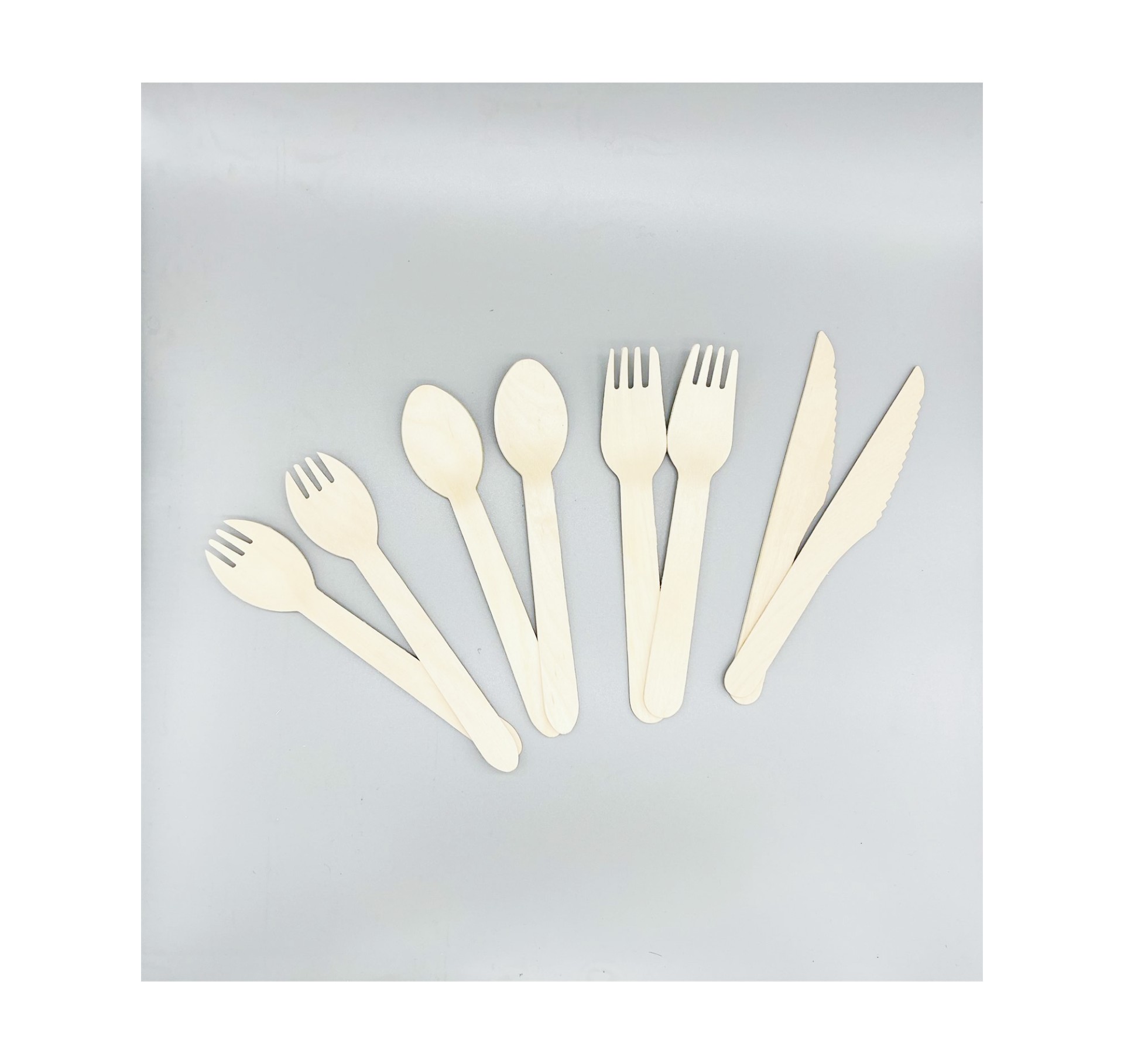
Three reasons, in honest order of importance.
Raw material at the source. Northern China and the Russian Far East grow the birch, poplar and pine that disposable cutlery is actually made from. Factories near the logs — Dalian sits at a major port next to those forest regions — buy green timber directly and mill it themselves. That vertical step is where the price difference versus European or reseller quotes comes from.
Complete tooling ecosystem. Cutting dies for knife and fork shapes, automatic kraft-sleeve baggers, laser engraving heads: all of it exists within a few hours of the port. Custom sizes and custom packing are normal orders here, not engineering projects.
Export repetition. Thousands of containers of wooden tableware leave Chinese ports annually, so the paperwork paths — fumigation, phytosanitary certificates, food-contact testing — are routine. A factory that exports daily treats compliance as a checkbox, not a crisis.
There are also honest counterweights: ocean transit time, currency and freight volatility, and a real spread between good and sloppy suppliers. That is what the rest of this guide is for.
Minimum order quantities in this product family usually land somewhere between "a pallet" and "half a container." The number to focus on is not the headline MOQ itself but what sits behind it:
A warning on very low MOQs. A "trader" who promises any quantity at any spec is buying from a factory like the one writing this guide, adding margin, and holding none of the risk when quality disputes appear. Fine for a trial pallet. Risky for the contract your retail chain is about to sign.
Once you commit to a container order, a disciplined factory runs this calendar:
| Stage | Duration |
|---|---|
| Order confirmation, artwork and packing approval | 2–5 days |
| Production (peeling, punching, drying, sanding, packing) | ~20 days |
| Pre-shipment inspection, lot records, export documents | 2–3 days |
| Inland transport + vessel window (Dalian port) | 3–7 days |
| Ocean transit: US West Coast / North Europe / Middle East | ~14–20 / 30–40 / 20–30 days |
Which lands you at roughly 8–10 weeks door to door for a US buyer, a bit more for Europe. Two buffers to plan around: Chinese New Year (factories idle for two weeks, ports jam for four more — final orders should leave your PO list 2–3 months before the holiday you are stocking for) and retail peak seasons, when vessel space is the bottleneck, not the production line.
How to tell a real 20-day claim from an invented one? Ask how many of your own steps the goods pass through. A factory that buys in sawn blanks, die-cuts, dries, finishes, sorts and packs under one roof can pull production records by lot number. A reseller cannot pull anything, because every stage lives in somebody else's building.
Wood is plant material, and plant material is biosecurity. Three documents answer for it, and you should know each by name before your first order:
1. Kiln-drying and moisture control. The quiet foundation of everything else. Blanks dried to export-grade moisture (we read and record every batch) will not mold at 30 days at sea, and dry, heavily processed wood is treated far more leniently by plant inspectors than raw timber. Mold claims are the most expensive argument in this trade; moisture records are how you never have one.
2. Phytosanitary certificate. The official statement, issued in China after CIQ (Customs' inspection and quarantine authority) examination, that the wood has been inspected and is pest-free. Whether your market demands it for manufactured wooden tableware depends on local biosecurity appetite — Australia and New Zealand are strict, much of Europe and North America treat thin processed articles lightly, Gulf markets ask case by case. Do not take a supplier's word or yours for it: put the exact product description in front of your customs broker before the first shipment. A factory that exports daily can produce the certificate when it is required and knows when it is not.
3. ISPM 15 pallets. Different animal: the wooden packaging around your goods — pallets, dunnage — must carry the heat-treated stamp (the wheat-and-CT mark) or the entire container can be rejected at the border for the pallet's sins. Ask your supplier to confirm in writing that export pallets are HT-treated and marked. We include this in the standard export setup.
Fumigation, when a market demands it beyond heat treatment, is a routine add-on service at origin — methyl bromide or alternatives depending on the destination's rules. It should never surprise anyone at the port of entry, because it should have been booked at the port of exit.
Phytosanitary rules protect the forest. Food-contact rules protect the diner. Wooden knives touch butter, coffee stirrers touch your tongue, so importers increasingly ask for what the wood is made of — or rather, what is on it.
Sourcing disposable wooden cutlery from China is not complicated, but it is procedural: order by cartons, plan 8–10 weeks door to door, insist on kiln-dried moisture records, know whether your market wants a phytosanitary certificate (ask your broker, not Google), confirm ISPM 15 pallets, and put a real test report in the folder before you commit. Do those six things and the wood that crosses an ocean arrives exactly as the tree intended.
Questions this guide did not answer are, for us, leads. Send them to the factory — we reply within 24 hours, and the good ones end up as future guides right here.
What is a realistic minimum order for disposable wooden cutlery from China?
For a direct factory, around 50 cartons per SKU. Sample quantities can be produced in under a week and couriered worldwide.
Do imported wooden tableware products need a phytosanitary certificate?
It depends on the destination. Strict-biosecurity markets may require one (or a treatment declaration); many markets treat thin kiln-dried manufactured wood leniently. Confirm with your customs broker. Chinese exporters obtain certificates through CIQ inspection when needed.
How long from purchase order to delivery?
Plan roughly 8–10 weeks door to door: 2–5 days approval, ~20 days production, 2–3 days inspection and documents, then 2–5 weeks ocean transit. Add 1–2 months of lead for pre-holiday peak seasons.
Why does kiln drying matter so much?
Moisture is the main cause of mold and warping claims inside containers. Export-grade dried blanks survive months at sea, and the per-lot moisture record settles any dispute before it starts.
Can the factory engrave or print our logo?
Yes — laser engraving on the wood or printing on kraft sleeves, OPP wraps and set wrappers. Laser engraving withstands moisture best and is the usual choice for food-service brands.
Back to the Buying Guides index, or see how the 12 production steps in this guide actually run in Factory & QC.